Quick Answer
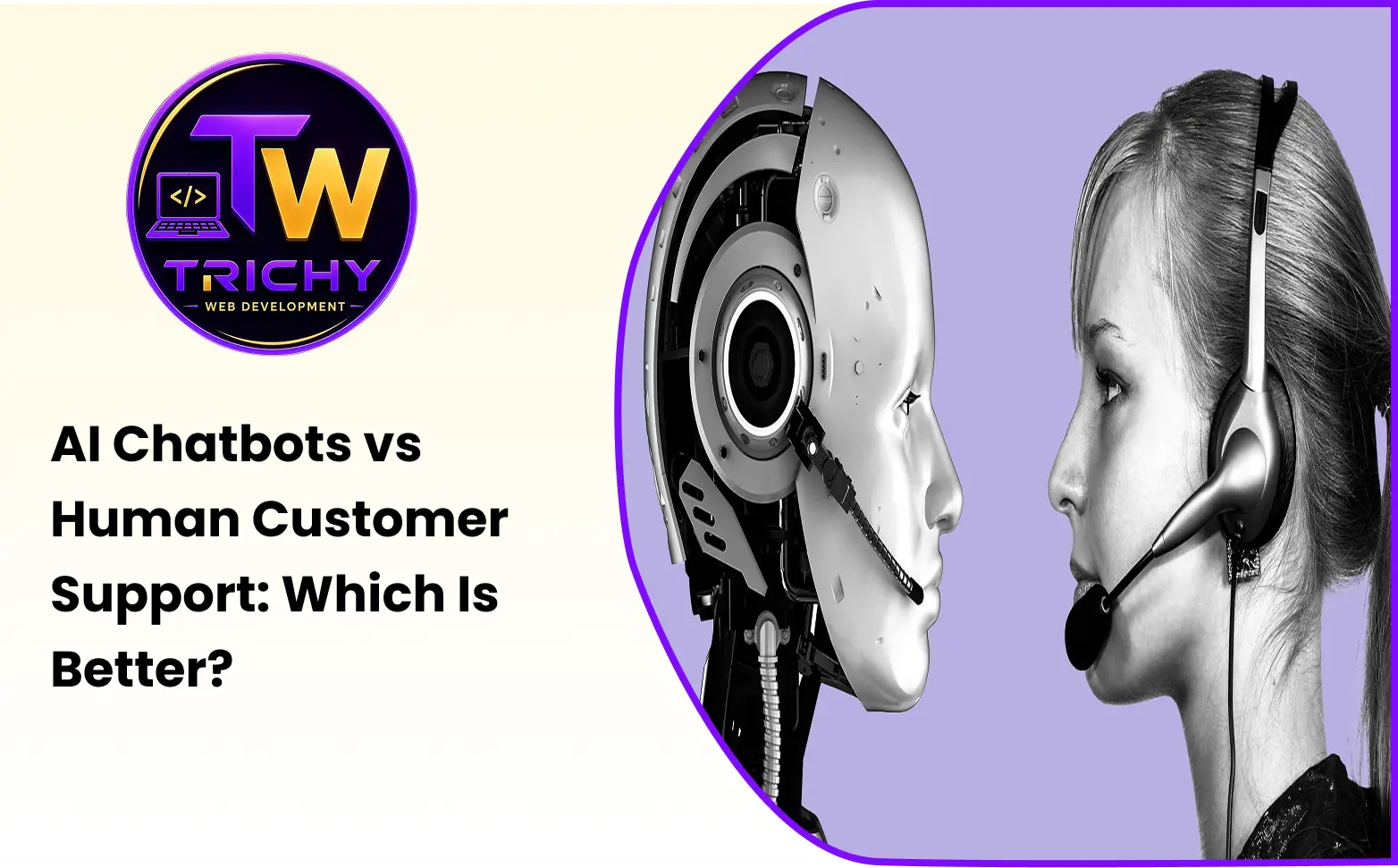
The debate around AI Chatbots vs Human Customer Support does not have a one-size-fits-all winner. AI chatbots deliver speed, 24/7 availability, and cost-efficient handling of repetitive queries, while human agents bring empathy, critical thinking, and personalized care to complex situations. In 2027, the most effective customer service strategies combine AI-powered customer support with skilled human teams to create a fast, reliable, and genuinely helpful experience.
Introduction: The Growing Debate on AI Chatbots vs Human Customer Support
Customer support has become one of the most important differentiators for modern businesses. Customers expect quick answers, consistent service, and personalized attention across every channel. As companies look for ways to meet these expectations, the comparison of AI chatbots vs human customer support has moved to the center of business strategy discussions.
AI chatbots for customer service have matured rapidly. Powered by natural language processing and machine learning, today's chatbots can understand intent, answer common questions, process simple requests, and even guide customers through transactions. At the same time, the advantages of human customer service remain clear: people can empathize, adapt to unexpected situations, and build trust in ways that automated systems still struggle to replicate. Businesses building digital customer experiences often start with a strong foundation through professional website development services that support both automated and human support channels.
This guide breaks down the strengths and limitations of both approaches, explores where each works best, and helps you decide how to balance AI customer service automation with the human touch your customers value.
How AI Chatbots for Customer Service Work
AI chatbots for customer service use artificial intelligence technologies to simulate conversations with users. Modern chatbots rely on natural language understanding to interpret customer messages, identify intent, and provide relevant responses. Unlike older rule-based bots that followed rigid scripts, AI-powered customer support systems can handle variations in phrasing, learn from interactions, and improve over time.
These systems integrate with business tools such as CRM platforms, knowledge bases, order management systems, and ticketing software. When a customer asks about an order status, a well-integrated chatbot can pull real-time information and respond instantly. Companies that want to deploy tailored conversational experiences often invest in specialized AI chatbot development to ensure the bot understands their products, policies, and customer needs.
AI customer service automation also supports multiple channels, including websites, mobile apps, social media, and messaging platforms. This omnichannel presence allows businesses to meet customers where they are, providing consistent answers regardless of the platform. The benefits of AI chatbots become especially visible during high-volume periods when human teams would otherwise be overwhelmed.
Benefits of AI Chatbots for Businesses
There are clear AI chatbot benefits for businesses that make them an attractive part of a support strategy. The most obvious advantage is availability. AI chatbots provide 24/7 support, responding to customers at any hour without breaks, holidays, or shift changes. For businesses serving customers across time zones, this round-the-clock presence is invaluable.
Speed is another major benefit. Chatbots can answer common questions in seconds, reducing wait times and improving customer satisfaction. They can handle thousands of conversations simultaneously, which makes customer support automation highly scalable. During product launches, sales events, or seasonal spikes, AI-powered customer support absorbs demand without requiring emergency hiring.
Cost efficiency also matters. While there is an upfront investment in building and training a chatbot, the long-term cost per interaction is typically lower than human-only support. AI chatbots also generate valuable data. Every conversation reveals patterns in customer questions, pain points, and preferences. When this data flows into a well-structured CRM software system, businesses gain insights that improve products, marketing, and service quality.
Advantages of Human Customer Service
Despite the rapid growth of AI, the advantages of human customer service remain significant. Human agents excel at empathy. When a customer is frustrated, confused, or upset, a real person can listen, acknowledge feelings, and respond with genuine care. This emotional intelligence builds trust and loyalty in ways that automated responses rarely achieve.
Complex problem-solving is another area where humans outperform bots. Many customer issues do not fit neatly into predefined categories. They may involve multiple systems, unusual circumstances, or conflicting policies. Human agents can think critically, ask clarifying questions, and craft creative solutions on the spot. In chatbots vs live chat support comparisons, live human agents consistently score higher for complex or high-value interactions.
Human support also strengthens brand relationships. A memorable conversation with a knowledgeable, friendly agent can turn a frustrated customer into a loyal advocate. For businesses that rely on long-term relationships, such as B2B services or high-consideration purchases, human customer support vs AI is not really a contest—people remain essential. Companies that invest in robust custom web applications can give their support teams unified dashboards and customer context, making human service even more effective.
Limitations of AI Chatbots and Human Support
A fair comparison of AI chatbot vs human support must acknowledge the limitations of both. AI chatbots can struggle with ambiguous questions, sarcasm, regional language variations, and emotionally charged conversations. When a bot fails to understand a customer, the experience becomes frustrating quickly. Poorly designed chatbots that trap users in loops without an easy path to a human agent damage brand reputation.
AI systems also require ongoing maintenance. They need training data, regular updates, and monitoring to stay accurate and relevant. Without proper oversight, chatbots can provide outdated or incorrect information. Security and privacy are additional concerns, especially when bots handle sensitive customer data.
Human customer support has its own constraints. It is expensive to scale, limited by working hours, and vulnerable to inconsistency. Agent performance can vary based on training, workload, and mood. Long wait times during peak periods frustrate customers, and hiring, training, and retaining skilled support staff is an ongoing challenge. Businesses that sell through digital channels often find that integrating support into their ecommerce platforms helps reduce pressure on human teams by letting chatbots handle routine order and shipping questions.
Finding the Right Balance: A Hybrid Support Model
For most organizations, the answer to AI chatbots vs human customer support is not choosing one over the other—it is building a hybrid model that uses each where it performs best. In this approach, AI chatbots handle first-line support: answering FAQs, collecting customer information, tracking orders, and resolving simple issues. When a conversation becomes complex, emotional, or requires human judgment, the chatbot seamlessly transfers the customer to a live agent.
The key to a successful hybrid model is smooth handoff. Customers should never have to repeat themselves. The chatbot should pass along the conversation history, customer details, and detected intent so the human agent can pick up right where the bot left off. This requires thoughtful integration between chat systems, customer data platforms, and support workflows. Businesses with mobile-first audiences also benefit from connecting support experiences across channels, including mobile app development that embeds chat and live support directly into the customer journey.
Industry research consistently highlights the growing role of automation in service. According to IBM's guide to chatbots, chatbots can improve customer engagement and reduce operational costs when they are designed with clear use cases and proper escalation paths. The businesses that see the best results are those that treat AI as a tool to empower human agents, not replace them.
How to Decide What Is Right for Your Business
Choosing between AI chatbots vs human customer support depends on your business size, customer expectations, budget, and support complexity. Start by analyzing your current support data. What percentage of inquiries are repetitive? How many requests require human judgment? What are your peak hours, and where do customers drop off?
If a large share of your tickets involve simple, repeatable questions—order status, business hours, password resets, pricing basics—AI customer service automation can deliver immediate value. If your business handles sensitive, high-value, or emotionally complex interactions, investing in skilled human agents should remain a priority. Most businesses fall somewhere in between, making a hybrid approach the most practical choice.
It is also important to plan for growth. A support strategy that works today should be able to scale tomorrow. Start with a focused chatbot use case, measure performance, gather customer feedback, and expand gradually. Over time, the balance between AI-powered customer support and human agents can evolve as technology improves and customer needs change.
Key Metrics to Measure Customer Support Performance
Whether you rely on AI chatbots for customer service, human agents, or a hybrid model, measuring performance is essential. Key metrics include first response time, average resolution time, customer satisfaction score, first contact resolution rate, and escalation rate. These indicators help businesses understand where AI customer service automation is delivering value and where human intervention is still needed.
For AI-powered customer support, it is also important to track bot containment rate, fallback rate, and customer sentiment after chatbot interactions. A high containment rate may look positive, but not if customers are leaving frustrated. Combining quantitative data with qualitative feedback gives a more complete picture of how well your support strategy is working.
Regular reviews of these metrics allow businesses to refine chatbot scripts, improve knowledge bases, and train human agents more effectively. Over time, this data-driven approach ensures that the balance between chatbots vs live chat support continues to align with customer expectations and business goals.
Security, Privacy, and Trust in AI-Powered Support
Trust is a critical factor in any customer support interaction. When businesses use AI chatbots, they must be transparent about data collection, storage, and usage. Customers should know when they are interacting with a bot and have an easy option to reach a human agent. Clear privacy policies and secure data handling practices help build confidence in AI-powered customer support.
Security measures such as encryption, access controls, and regular audits protect sensitive customer information. Businesses should also ensure that their AI systems comply with relevant data protection regulations and industry standards. Human agents play an important role here as well, especially when handling sensitive account issues or verifying customer identities.
By prioritizing security and transparency, companies can capture the benefits of AI chatbots without sacrificing customer trust. A responsible approach to customer support automation strengthens brand reputation and creates a support experience that customers feel comfortable using again and again.
Best Practices for Implementing AI Customer Service Automation
Successful customer support automation starts with a clear plan. Businesses should map their most common customer inquiries, define escalation rules, and create a knowledge base that the chatbot can rely on. Testing the chatbot with real scenarios before launch helps identify gaps in understanding and response quality. It is also important to design the conversation flow so customers can easily reach a human agent when needed.
After launch, continuous improvement is key. Review chat transcripts, monitor customer feedback, and update responses regularly. Training support agents to work alongside AI tools ensures a smooth hybrid experience. When businesses treat AI chatbots as evolving systems rather than one-time setups, they achieve better accuracy, stronger customer satisfaction, and more reliable support outcomes over time.
Conclusion
The comparison of AI chatbots vs human customer support is not about declaring a single winner. AI chatbots bring speed, scalability, and efficiency to customer service automation, while human agents provide empathy, judgment, and relationship-building that technology cannot fully replicate. The real advantage comes from combining both. By using AI-powered customer support for routine tasks and empowering human teams to handle complex interactions, businesses can deliver faster responses, lower costs, and better customer experiences. In 2027, the smartest support strategies are not AI-only or human-only—they are thoughtfully designed partnerships between people and technology.