Blog Summary
Clear return and refund information helps online shoppers understand what happens if a purchased product needs to be returned. Instead of hiding the policy on a separate page, online stores customers should present relevant information at key decision points, including product pages, cart, checkout, order confirmation, and customer support areas. Clear eligibility rules, timelines, conditions, and instructions can reduce uncertainty and support a more transparent shopping experience.
Quick Answer / Featured-Snippet Answer
An effective e-commerce return policy display should make important return conditions visible before purchase. Online stores should explain eligibility, return windows, exclusions, refund methods, expected timelines, shipping responsibilities, and return instructions on relevant product and checkout pages while providing a complete policy page for detailed information.
Introduction
Customers often consider what will happen after a purchase before they decide to place an order. If a product does not fit, arrives damaged, differs from expectations, or simply needs to be returned according to the store's applicable policy, shoppers want to know whether they can get a replacement or refund and how the process works. When this information is difficult to find, customers may hesitate before purchasing or contact support for questions that could have been answered directly on the website. A strong e-commerce return policy display does not mean placing a large block of legal text everywhere. It means presenting the right information at the right stage of the shopping journey. Product pages can communicate basic eligibility, checkout can reinforce important conditions, and a dedicated policy page can provide complete details. This layered approach makes return information easier to understand without overwhelming shoppers.
What Is E-commerce Return Policy Display and Why Does It Matter?
E-commerce return policy display refers to how an online store communicates its return, replacement, exchange, and refund information to customers.
The information can appear across several parts of the website:
-
Product pages.
-
Cart pages.
-
Checkout.
-
Dedicated return policy pages.
-
Order confirmation pages.
-
Customer account areas.
-
Help or support sections.
The objective is to make important conditions discoverable before and after purchase.
A customer should not have to search through multiple unrelated pages to answer basic questions such as:
Can I return this product?
How many days do I have?
Who pays for return shipping?
When will my refund be processed?
Clear communication can make the purchasing experience more predictable.
What Information Should an Online Store Return Policy Include?
A complete return policy should explain the conditions that apply to returns and refunds in language customers can understand.
Important information can include:
Return Eligibility
Explain which products can be returned and under what conditions.
Return Window
State the applicable period within which customers need to request or complete a return.
Product Condition
Explain whether products must be unused, unopened, undamaged, or returned with specific packaging or accessories.
Exclusions
Clearly identify products or situations that are not eligible for return where applicable.
Refund Method
Explain whether approved refunds are returned through the original payment method or another applicable method.
Refund Timeline
Communicate how long customers should expect the refund process to take after the return is received or approved.
Return Shipping
Explain who is responsible for return shipping costs and whether any conditions apply.
Return Process
Provide clear steps customers should follow to initiate and complete a return.
The exact policy should reflect the business's actual operating rules and applicable legal requirements.
Return Policy Placement on Product Pages
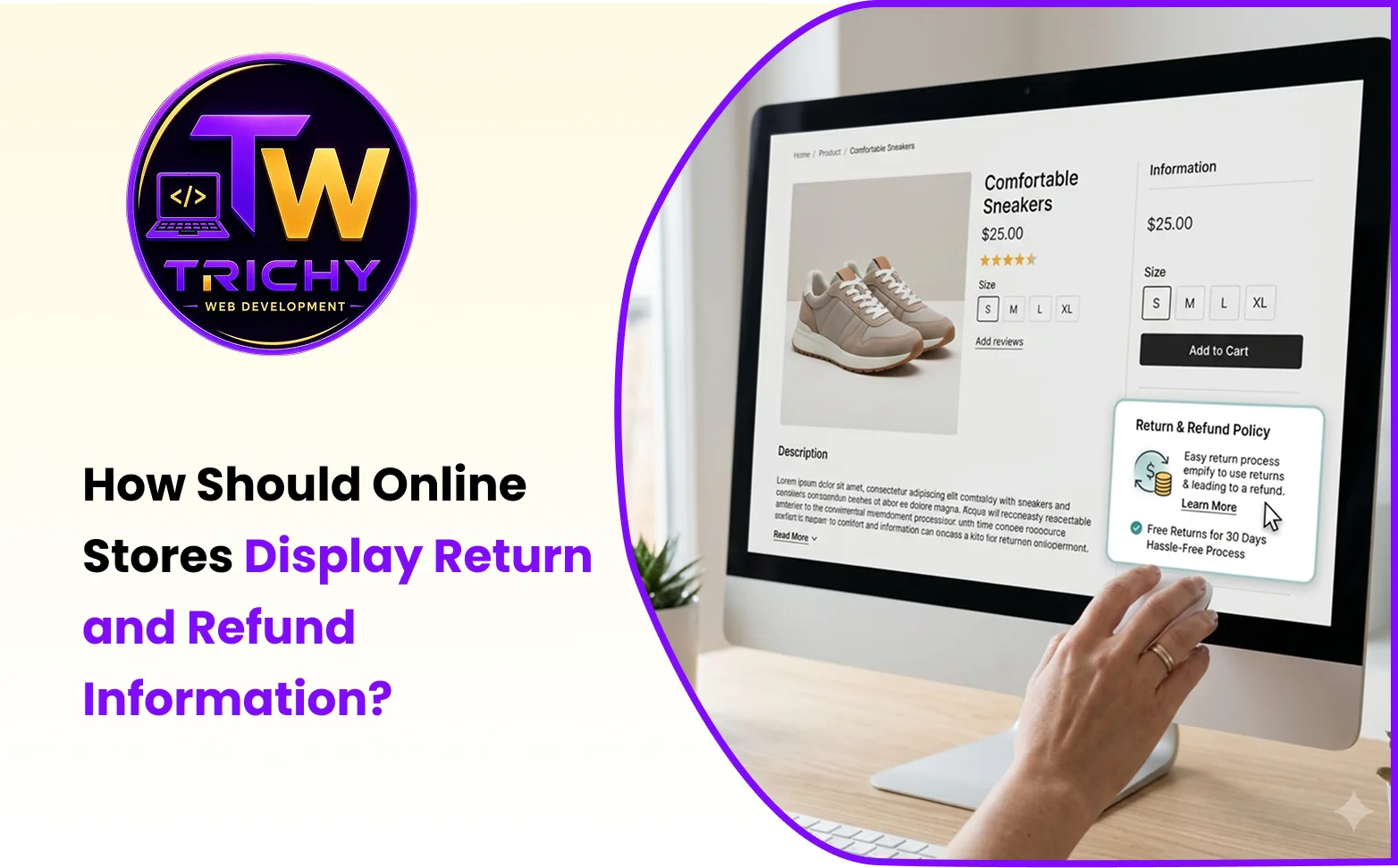
Return policy placement on product pages is important because the product page is often where customers make their purchasing decision.
A shopper should be able to find a short summary of important return information without leaving the product page.
For example:
Returns: Eligible items can be returned within the stated return period, subject to the applicable conditions. See the complete return policy for details.
The exact wording should reflect the store's real policy.
The product page can also communicate product-specific conditions.
For example, a particular category may have different return eligibility from standard products.
This prevents customers from assuming that one general rule applies to every item.
Product Page Return Eligibility
Product page return eligibility should be especially clear when some products have special conditions.
For example, a store may sell:
-
Standard products.
-
Personalized products.
-
Perishable products.
-
Clearance products.
-
Made-to-order products.
-
Digital products.
These categories may have different return conditions depending on the business and applicable rules.
Instead of forcing customers to discover these differences after purchasing, the relevant product page should communicate important restrictions before the order is placed.
How to Display Return Information Without Cluttering the Page
A complete return policy can be lengthy, but the product page does not need to display every paragraph.
A layered approach works well.
Product Page
Show the most relevant summary.
Policy Page
Provide the complete policy.
Checkout
Reinforce important conditions before purchase where appropriate.
Order Confirmation
Provide a link to return instructions and support information.
This allows customers to access important information without turning the product page into a long legal document.
Online Store Refund Information
Online store refund information should clearly distinguish between eligibility and processing.
Customers often want to know two separate things:
Am I eligible for a refund?
and
When will I receive it?
The policy should explain both.
For example, the store might communicate:
Refund eligibility: Approved returns are refunded according to the applicable product and return conditions.
Processing: Once the return is received and approved, the refund is initiated through the applicable payment method.
The exact timeline should be based on the store's actual process rather than promising an unrealistic fixed period.
Refund Timeline Communication
Refund timeline communication is important because the word "refund" can mean different stages.
A useful explanation can distinguish:
Return requested → Return approved → Product received → Return inspected → Refund initiated → Payment provider processing → Funds received
This helps customers understand why there may be a difference between the date they send an item back and the date money appears in their account.
If the business depends on external payment providers or banking processes, the policy should communicate this appropriately without creating misleading guarantees.
Return Instructions for Online Shoppers
Return instructions for online shoppers should be easy to follow.
A practical return process might be presented as:
Step 1: Check Eligibility
Confirm that the product meets the applicable return conditions.
Step 2: Submit the Request
Use the website's return process or contact the specified support channel.
Step 3: Prepare the Product
Pack the item according to the stated return requirements.
Step 4: Arrange the Return
Follow the applicable shipping or collection instructions.
Step 5: Wait for Assessment
The business receives and checks the returned product where required.
Step 6: Receive the Outcome
The customer receives the applicable refund, replacement, exchange, or other resolution according to the policy.
Instructions should be written in the same order customers need to perform the actions.
A CLEAR Framework for Return Policy Display
Online stores can evaluate their return information using the CLEAR framework:
C — Communicate Eligibility
Tell customers whether the product can be returned and identify important exceptions.
L — Locate Information Easily
Place relevant return details where customers naturally look for purchase information.
E — Explain the Process
Show customers what they need to do if they want to return an item.
A — Announce Timelines
Explain return windows and refund processing stages clearly.
R — Reference the Full Policy
Provide access to the complete terms for customers who need detailed information.
This approach balances transparency with a clean shopping experience.
Where Should Return Information Appear?
A strong e-commerce website can distribute return information across the customer journey.
|
Website Area |
Useful Return Information |
|
Product Page |
Eligibility summary and product-specific conditions |
|
Cart |
Important return restrictions where relevant |
|
Checkout |
Key policy reminder and access to full policy |
|
Order Confirmation |
Return policy link and support instructions |
|
Customer Account |
Order-specific return options |
|
Help Centre |
Detailed return process |
|
Policy Page |
Complete terms, conditions, exclusions, and timelines |
The exact placement can vary according to the website structure and business model.
Return Policy and Checkout Transparency
Customers should not discover major return restrictions only after payment.
For example, imagine a customer purchases a product believing it can be returned easily. After completing payment, they discover that the product belongs to a category with different eligibility conditions.
This creates a poor experience even if the business technically followed its written policy.
Important restrictions should therefore be communicated before purchase.
Checkout can provide a concise reminder and a clear route to the complete policy.
Product-Specific Return Rules
Not every product necessarily needs the same return information.
An online clothing store might have different conditions for:
-
Standard apparel.
-
Customized products.
-
Innerwear.
-
Sale items.
An electronics store may have different requirements involving:
-
Original accessories.
-
Packaging.
-
Serial numbers.
-
Physical damage.
The website should make these differences understandable without forcing customers to interpret complicated policy language.
Mobile Return Policy Display
Return information should also be easy to access on mobile devices.
Customers should not have to navigate through multiple tiny links or scroll through an enormous wall of text to find essential information.
Useful mobile patterns include:
-
Expandable policy summaries.
-
Clearly labeled links.
-
Short eligibility statements.
-
Structured headings.
-
Easy-to-read timelines.
-
Mobile-friendly return forms.
The detailed policy can remain comprehensive while the interface makes important information easy to scan.
Common Return Policy Display Mistakes
One common mistake is hiding the return policy only in the website footer.
Another is using vague statements such as "easy returns" without explaining what that actually means.
Businesses may also provide a general policy without identifying product-specific exclusions.
Another problem is communicating a refund period without explaining when the timeline begins.
For example, "refund within seven days" may leave customers wondering whether the period starts from the return request, pickup, receipt, inspection, or approval.
A further mistake is providing instructions that require customers to contact support without explaining what information they need to provide.
Best Practices for E-Commerce Return Information
Keep the policy easy to locate throughout the shopping journey.
Provide a concise return summary on relevant product pages.
Clearly identify product-specific eligibility conditions.
Explain return windows in plain language.
Describe refund processing separately from return eligibility.
Explain return shipping responsibilities.
Provide step-by-step instructions.
Make the complete policy accessible from product and checkout pages.
Ensure the policy is readable on mobile devices.
Update the policy whenever operational rules change.
Make sure website wording matches the actual return process.
The last point is particularly important. A beautifully written return policy does not help if the business operates differently from what the website promises.
Return Policy Checklist
Before publishing an e-commerce return policy, check whether:
-
Return eligibility is clearly explained.
-
Return periods are stated clearly.
-
Product-specific restrictions are identified.
-
Excluded products are listed where applicable.
-
Product condition requirements are explained.
-
Return shipping responsibilities are communicated.
-
Refund methods are described.
-
Refund processing stages are explained.
-
Customers know how to start a return.
-
Important information appears on relevant product pages.
-
Checkout provides access to the complete policy.
-
Return information is easy to read on mobile.
-
Policy wording matches the actual business process.
-
Customers can easily find support information.
How E-Commerce Website Development Supports Better Return Information
Return and refund communication should be integrated into the e-commerce website rather than treated as a separate document added after development.
A well-planned online store can connect product-specific eligibility, policy links, customer accounts, order management, return requests, refund workflows, notifications, and support information.
For businesses developing or improving an online store, Trichy Web Development can support e-commerce website development with product pages, customer workflows, order functionality, responsive interfaces, and other features needed to create a clear shopping experience.
Conclusion
A return policy is most useful when customers can understand it before they need it. Effective e-commerce return policy display combines concise product-level information with a complete policy page, clear eligibility conditions, understandable refund timelines, and practical return instructions. Businesses should place relevant information at natural decision points rather than hiding everything in a footer or presenting customers with a long block of legal text. Product pages can answer basic eligibility questions, checkout can reinforce important conditions, and order or account areas can guide customers through the post-purchase process. When return information is accurate, accessible, and consistent with the actual business workflow, online stores can create greater transparency and make the overall shopping experience easier to understand.